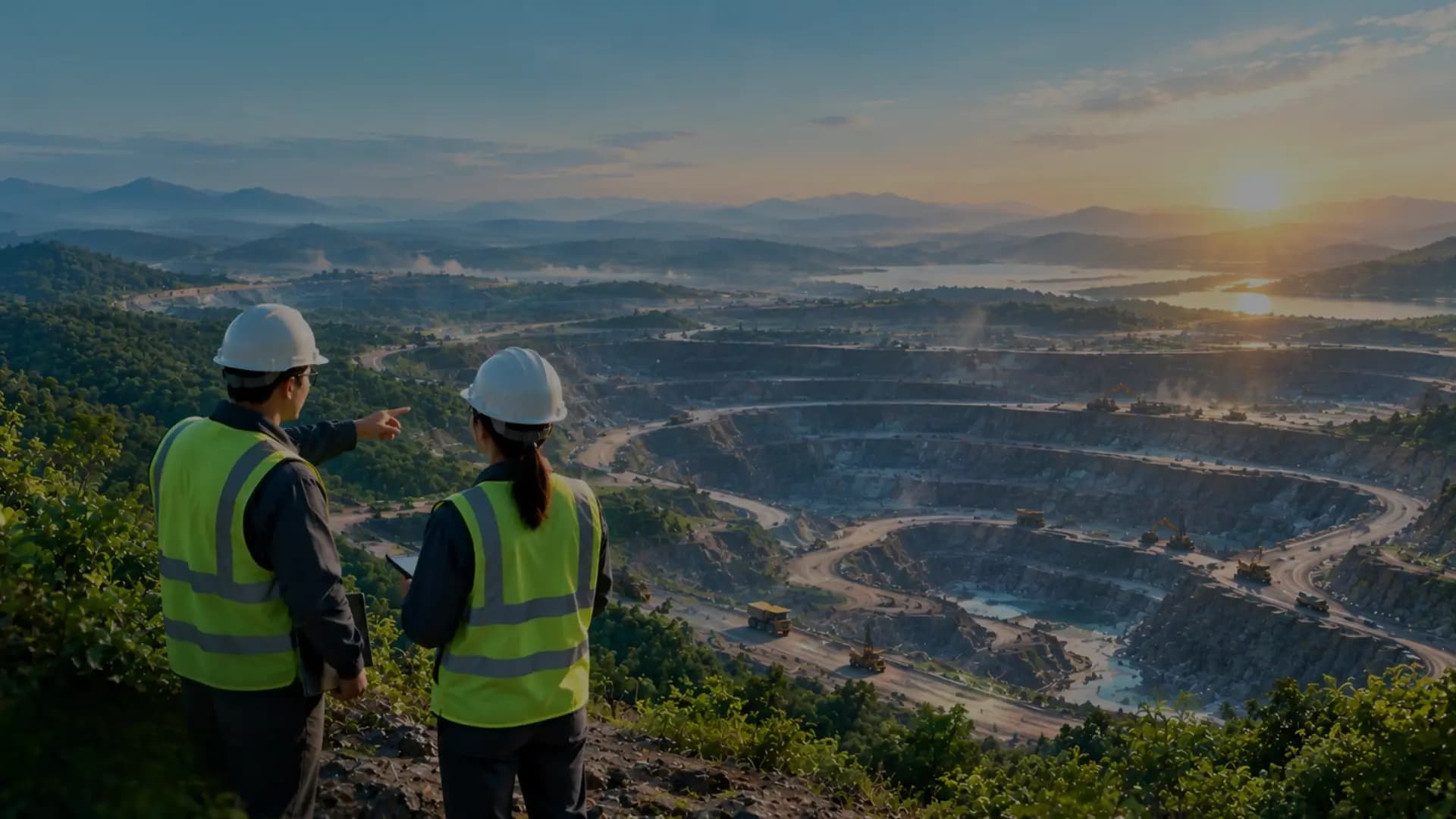
Connecting mine-site execution with enterprise control
A connected operating model links planning, operational execution, cost control and corporate management.
Connecting mine-site execution with enterprise control
A connected operating model links planning, operational execution, cost control and corporate management. Follow one phase at a time to see which parts of the mine site, the operations platform and enterprise control it draws on.
Links are indicative, read from the phase and layer names in the model — not a system specification.
01Plan
Mine planning, the production plan and fleet requirement are set against the PIT / WBS structure on site and the budget held in enterprise control.
In this phase: Mine planning · Production plan · Budget · PIT / WBS · Fleet requirement
Across the layers
- Layer 1Mine sitePITFleet
- Layer 3Enterprise controlBudget
Closes the gapPlan ≠ Actual
02Execute
Production, hauling, maintenance and material movements happen across fleet, workshop and stockpile. Operational capture records them on the platform, where they reach inventory and assets.
In this phase: Production · Hauling · Fleet · Maintenance · Material · Site activities
Across the layers
- Layer 1Mine siteFleetProductionWorkshopStockpile
- Layer 2Mining operations platformOperational capture
- Layer 3Enterprise controlInventoryAssets
AnswersWhich assets are actually creating value?
03Measure
Timesheets, quantities, working hours, ritase and equipment activity from fleet and production are captured and validated into one measure of operational performance.
In this phase: Timesheet · Quantity · Working hours · Ritase · Equipment activity · Operational performance
Across the layers
- Layer 1Mine siteFleetProduction
- Layer 2Mining operations platformOperational captureValidation
AnswersWhere are we losing production?
04Cost
Cost collection sets actual cost against standard cost, allocates it and shows the variance — carried through inventory and budget to COGS in finance.
In this phase: Standard cost · Actual cost · Cost allocation · Variance · COGS
Across the layers
- Layer 2Mining operations platformCost collection
- Layer 3Enterprise controlFinanceInventoryBudget
AnswersWhat is our true cost per tonne?
05Manage
Management reporting, financial control and performance management draw on operational control and consolidated finance — the basis for decision support.
In this phase: Management reporting · Financial control · Performance management · Decision support
Across the layers
- Layer 2Mining operations platformOperational control
- Layer 3Enterprise controlFinanceConsolidation
AnswersCan operational performance be reconciled with financial performance?
↺Feedback & governance loop
Management decisions feed back through enterprise control into planning and control — policies, standards, budget and master data.
Every operational event should create traceable business and financial value.
Target outcomes
- 01One operational data foundation
- 02End-to-end cost traceability
- 03Consistent process control
- 04Faster management decisions
Behind every tonne produced is an interconnected chain of geological, operational, commercial and financial decisions.
The mining value chain
01
Discover
Exploration and resource definition.
02
Develop
Mine planning and development.
03
Operate
Mining operations.
04
Process
Processing and beneficiation.
05
Move
Logistics and infrastructure.
06
Commercialise
Sales and trading.
07
Monetise
Finance and cash.
08
Sustain
ESG and closure.
Where mining value gets lost
The biggest performance gaps are rarely caused by one isolated process. They emerge between functions, systems and decisions.
Production
PlanActual
Production targets are set centrally, but operational deviations may only become visible after the impact has already occurred.
Cost
Reported costCost-to-produce
Reported operating costs do not always reveal the true economic cost of producing each tonne.
Equipment
AvailabilityProductivity
High equipment availability does not necessarily translate into higher productive output.
Contractors
Contract valuePerformance
Contractor spend can be visible while the operational value delivered remains difficult to measure.
Inventory
More stockMore availability
Remote operations often carry significant inventory buffers while still experiencing critical stock-outs.
Finance
Financial reportingOperational intelligence
Monthly reporting may explain what happened without explaining what is happening now.
Data
More dataBetter decisions
Multiple systems can increase data availability while making enterprise visibility harder.
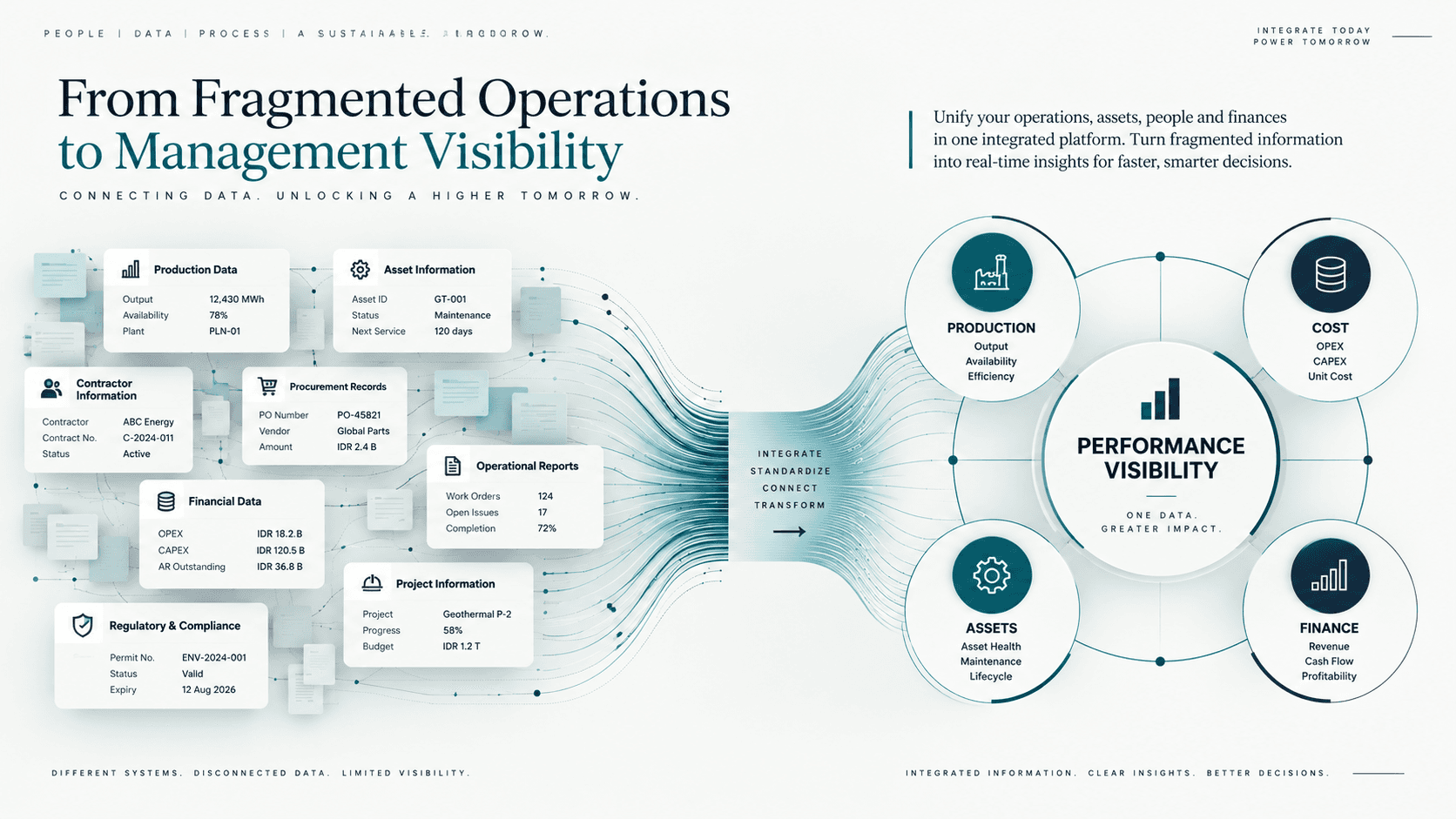
Fragmented processes create operational inefficiency and cost leakage
Manual transactions, disconnected systems and limited visibility weaken control from the mine site all the way through to finance.
Five questions every mining executive should be able to answer
Not in a month-end meeting. Not after consolidating spreadsheets. When the decision needs to be made.
What is our true cost per tonne?
Not just total cost — can management see the economic drivers behind cost performance across operations?
Where are we losing production?
Can production variance be linked to equipment, people, contractors, geology, logistics and processing constraints?
Which assets are actually creating value?
Is management measuring availability, or economic productivity?
How quickly can we detect performance deterioration?
How long does it take to move from an operational event to a management decision?
Can operational performance be reconciled with financial performance?
Can management connect tonnes, quality, cost, revenue and cash in one trusted view?
Turning complexity into measurable performance
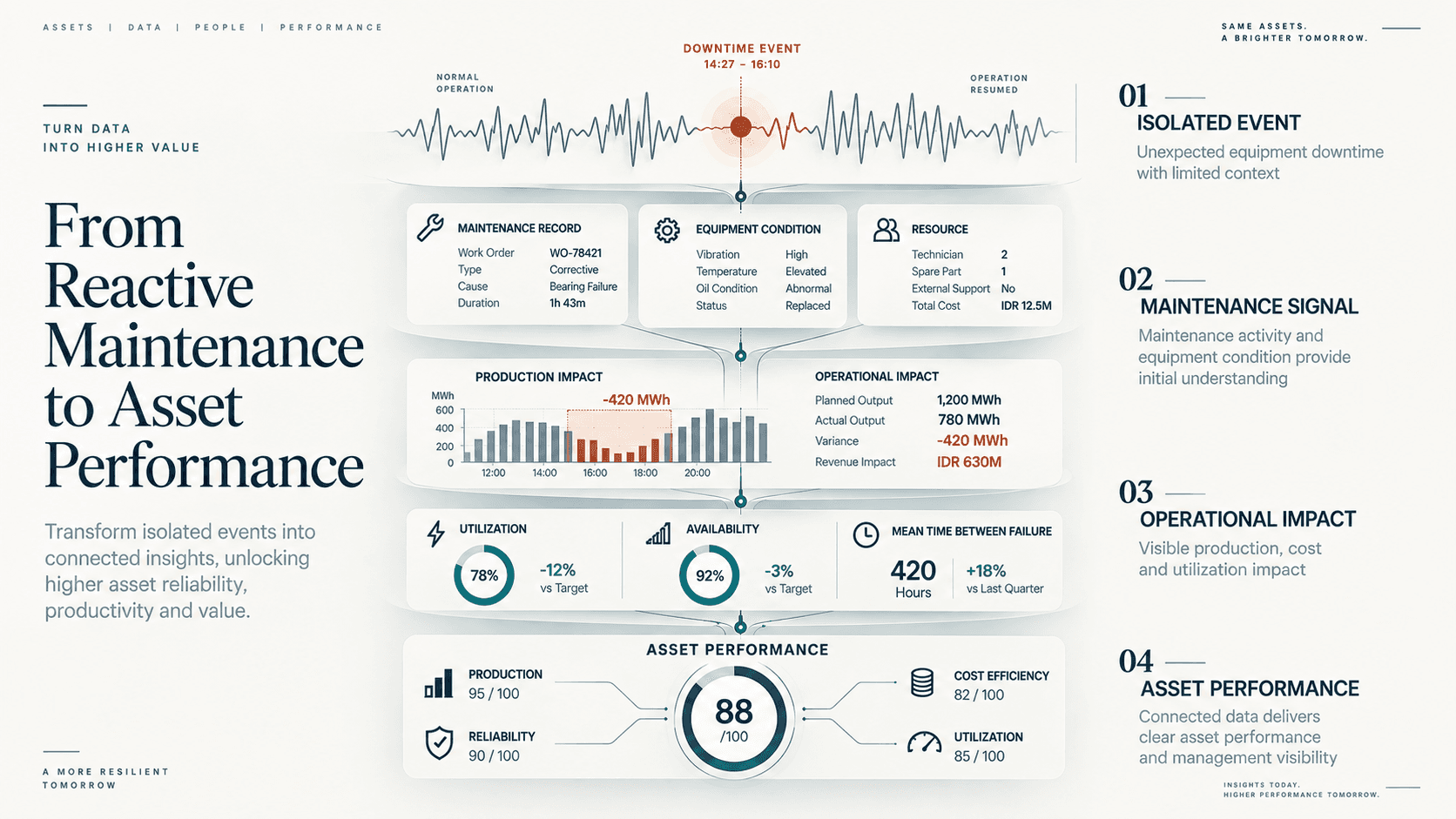
Selected transformation patterns across operations, finance, assets and enterprise visibility — integrated mine-to-finance visibility, and the move from reactive maintenance to asset performance.
The connected operating model
Take a closer look at our products and find the right solution for your business.





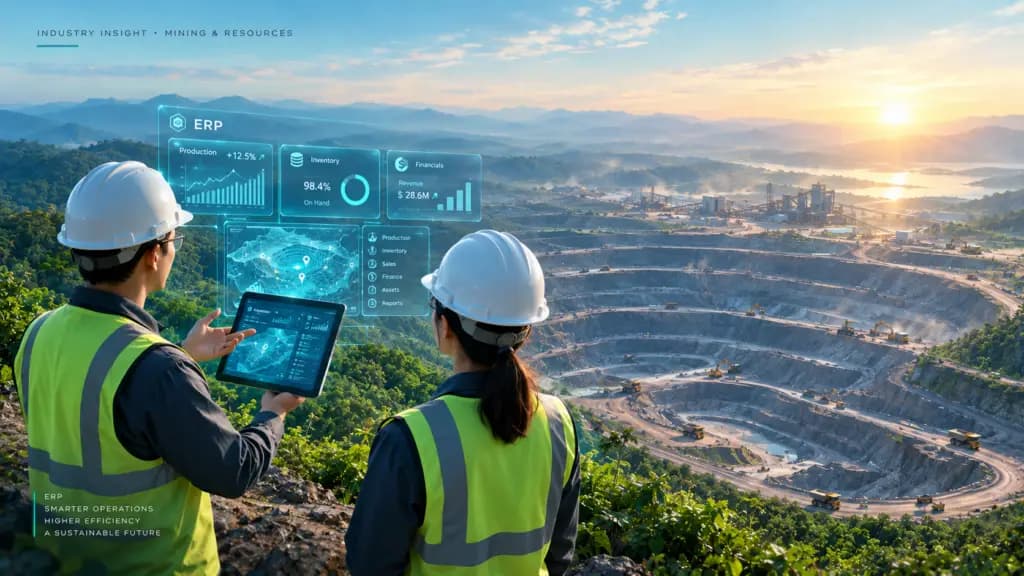
Power smarter mining operations
Apergu connects critical processes, brings data together, and gives you the visibility you need to keep operations moving.